


How Long Does It Take to Charge an EV with a 7kW Wallbox? A Realistic Look at Daily Charging
If you recently bought an EV - or you're planning to install a charging station for a residential community, hotel, or workplace - one question always comes up:
"How long will it take to charge a 60kWh EV battery using a 7kW wallbox?"
The straightforward answer is: from 20% to 80%, it takes about 5 hours.
But the full story is much more interesting, especially once you understand how EV charging behavior actually works in real life.

Why 20% to 80% Matters More Than a Full Charge
Most EV charging isn't like filling a gas tank.
Drivers rarely - and don't need to - charge from 0% to 100%. Instead, charging happens in short, predictable cycles:
Plug in at night
Unplug in the morning
Repeat the next day
This means the "20% → 80%" window is the gold standard for measuring charging time. It's the range most EV owners use daily, and it's the range where batteries charge most efficiently.
So when we say a 7kW wallbox EV charger needs around five hours, that's based on real-world patterns, not lab conditions.

Why 7kW is Ideal for Daily Charging
Many EV owners think faster is better - so why do so many choose a 7kW charger over 11kW or 22kW AC units?
Because daily charging doesn't require maximum power output.
Here's why:
1. Most EV owners drive less than 60–80 km per day
Replacing that energy only needs 5–8 kWh of electricity - something a 7kW charger replenishes quickly.
2. Overnight charging naturally provides a long charging window
Even if you sleep only 6 hours, that's still enough time to restore the battery to your next day's usage.
3. 7kW puts less stress on your home grid
No electrical upgrades.
No expensive circuit reconfiguration.
No overheating risk.
For a daily charging routine, a 7kW wallbox is simply the most practical choice.
Charging Time Breakdown for Different Battery Sizes
Here's a real-world estimate based on typical EV battery capacities:
| Battery Capacity | Charge (20%→80%) | Estimated Time with 7kW |
|---|---|---|
| 40 kWh EV | 24 kWh | 3.5 hours |
| 50 kWh EV | 30 kWh | 4.3 hours |
| 60 kWh EV | 36 kWh | 5 hours |
| 70 kWh EV | 42 kWh | 6 hours |
Most EVs fall between 50–70kWh, which makes the 7kW wallbox EV charger perfectly matched to overnight or workplace charging.

Why This Matters for Communities, Hotels, and Parking Operators
If you're installing chargers for more than one user group, charging time impacts more than convenience - it affects:
parking turnover
user satisfaction
power load stability
operational cost
charging availability
A 7kW wallbox is ideal for shared environments because:
Communities:
Residents charge overnight without competing for spaces.
Hotels:
Guests can plug in after check-in and leave with a full battery the next morning.
Workplace parking:
Employees charge during work hours with no impact on grid capacity.
Municipal public parking:
Consistent turnover and predictable power load keep operations stable.
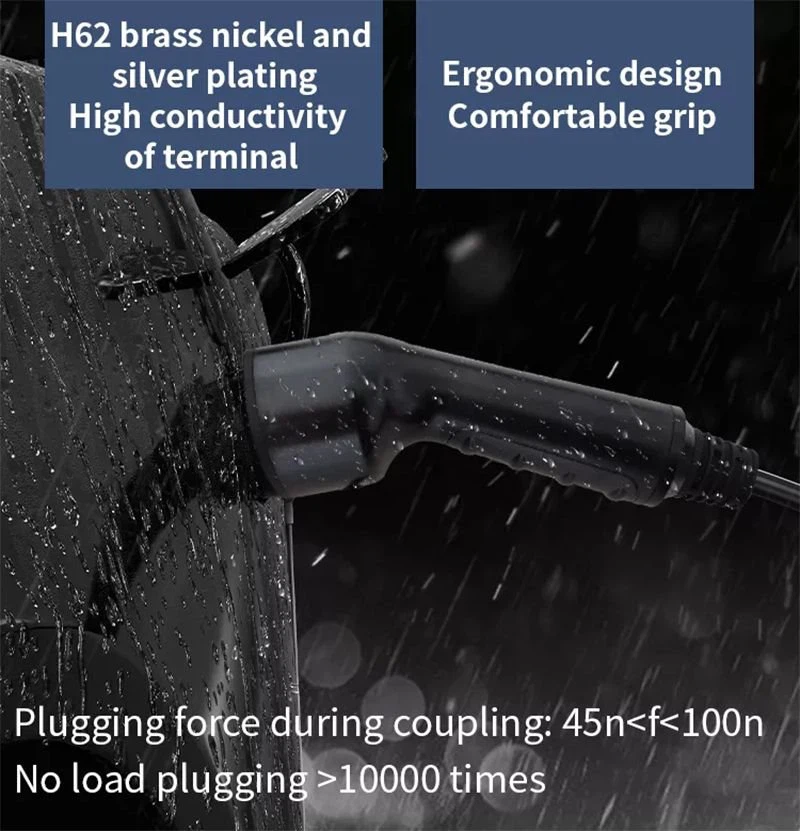
Why 7kW Charging is Safer for Long-Term Battery Health
Fast-charging isn't always better for battery longevity.
7kW AC charging is:
gentler
cooler
more controlled
less likely to cause degradation
For users who charge daily - especially fleet and community users - a 7kW wallbox EV charger is far better for keeping battery health high over the long term.
Final Thoughts
A 7kW wallbox isn't about raw speed - it's about matching real-world charging behavior. For the majority of EV owners, fleet users, hotels, communities, and workplaces, 7kW provides:
predictable overnight charging
safe battery performance
affordable installation
compatibility with existing power systems
low grid impact
For these reasons, a 7kW wallbox EV charger is the most balanced charging solution for everyday EV life.


