


A Practical Buying Guide: How to Choose a Reliable Portable 220V EV Charger
With EV adoption rising globally, more everyday drivers, hotels, and operators are turning to portable 220V EV chargers as a practical charging solution.
They're compact, installation-free, and compatible with standard power outlets-but the market has become crowded, with products varying wildly in safety, speed, and durability.
If you're considering purchasing one-either for personal use or operational deployment-this guide breaks down exactly what to look for.
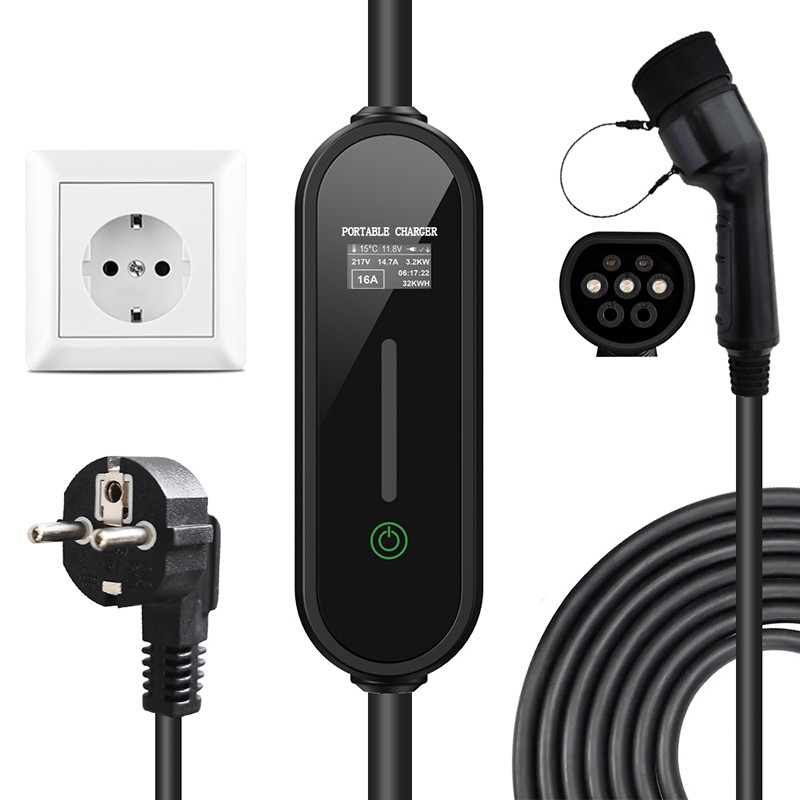
1. Connector Compatibility: The First Box You MUST Check
A portable charger is useless if it doesn't fit your EV.
Better chargers-like the 220V model we're referencing-offer custom-formed connector heads:
Type 1
Type 2
GBT
Additional country-specific variants
Why this matters
Many low-end chargers use universal connectors that wear out quickly or fail to maintain stable contact.
A properly molded connector ensures:
Low resistance
No overheating
Smooth plug-in/out even after 1,000+ uses
For fleet operators or hotels that serve multiple EV types, connector precision is the foundation of reliability.
2. Safety Protections: Non-negotiable for Portable Charging
Portable charging often happens in environments with unpredictable power quality.
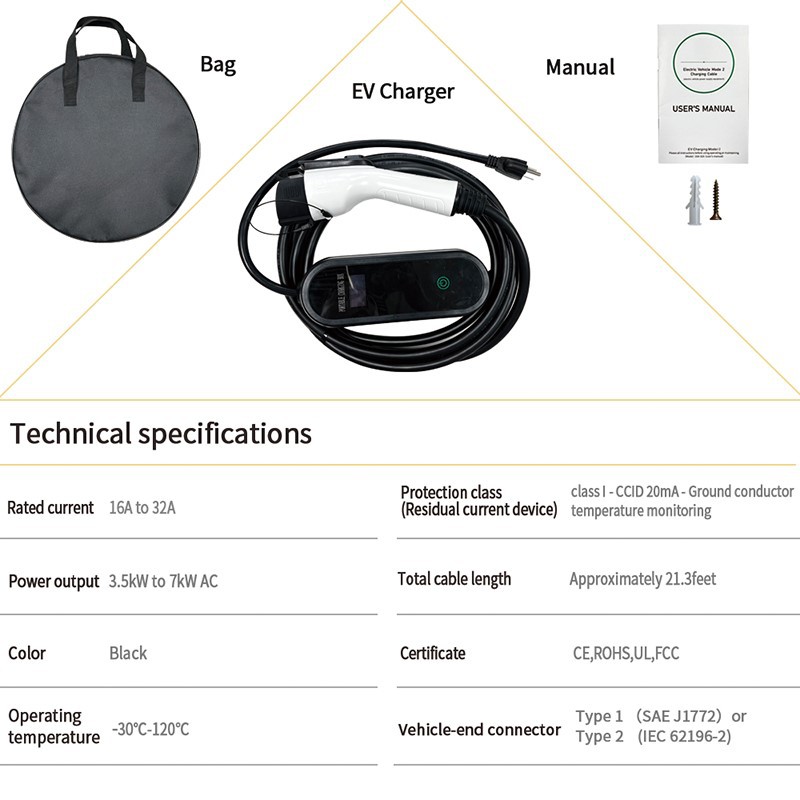
Your charger must include:
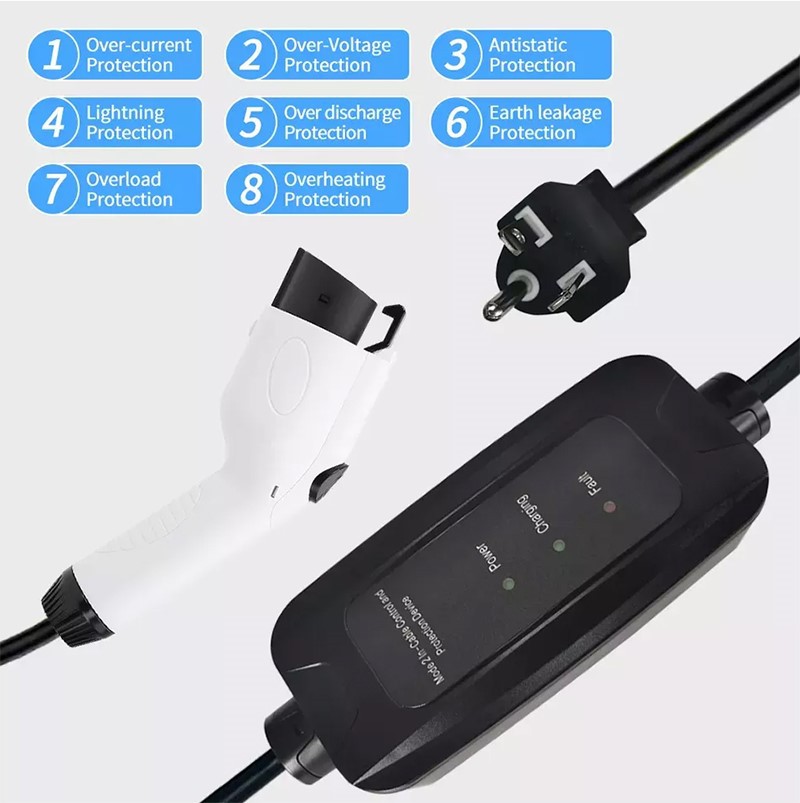
Overcurrent protection
Overvoltage protection
Short-circuit cutoff
Type A + AC 30mA leakage protection
Thermal protection
Flame-retardant casing
Waterproof and dust-resistant design
If a product lacks even one of these, don't buy it.

3. Cable Material: TPU Is the Gold Standard
The cable on a portable charger is exposed to:
dragging
bending
cold
heat
occasional rain
You want TPU, not rubber.
TPU offers:
flexibility in low temperatures
tear resistance
longer lifespan
no hardening in winter
This is why commercial-grade chargers always use TPU.

4. Charging Speed and Realistic Expectations
A 220V portable charger typically charges at a moderate AC rate, ideal for:
overnight charging
workplace charging
long-stay parking
It's not as fast as a wallbox or DC station, but it is:
much faster than 110V chargers
far cheaper than installing fixed equipment
perfect for daily routines
For a 60kWh EV, expect 20% → 80% in roughly 5–6 hours, depending on the onboard charger.
5. Who Should Consider Buying a 220V Portable Charger?
Personal EV Owners
Ideal if you:
live in an apartment
cannot install a wall-mounted charger
travel frequently
want a backup solution
Community Service Departments
Useful as:
a shared mobility service
emergency backup unit
resident support tool
Hotels & Homestays
Offer overnight charging without building new infrastructure.
Parking Lots
Great as:
temporary chargers
overflow capacity
backup units during outages
Dealers
Portable chargers attract customers who prefer flexible charging over installation.

Conclusion
A portable 220V EV charger is more than a convenience-it's a practical tool that makes EV charging accessible, flexible, and cost-efficient.
When choosing one, prioritize:
✔ connector precision
✔ safety
✔ TPU cable
✔ real testing
✔ multi-scenario usability
Buy smart, and your portable charger will serve you reliably for years.


