How to Choose Public Car Charging Piles: A Practical Guide for Businesses & Municipalities?
If you're planning to deploy EV charging stations in parking areas, commercial buildings, or municipal zones, you've likely discovered one truth: not all public car charging piles are created equal.
Fast charging isn't just about plugging in and delivering power - it's about reliability, system intelligence, safety, user experience, and long-term value.
Today, EV drivers expect charging to be as seamless as filling up fuel. For operators, choosing the right charging pile means higher utilization, lower maintenance, and faster ROI.
Let's break down what really matters when selecting public EV charging piles.

⚡ Start with Your Charging Use Case
Before comparing technical specs, determine the primary purpose of your charging installation:
Scenario Recommended Solution
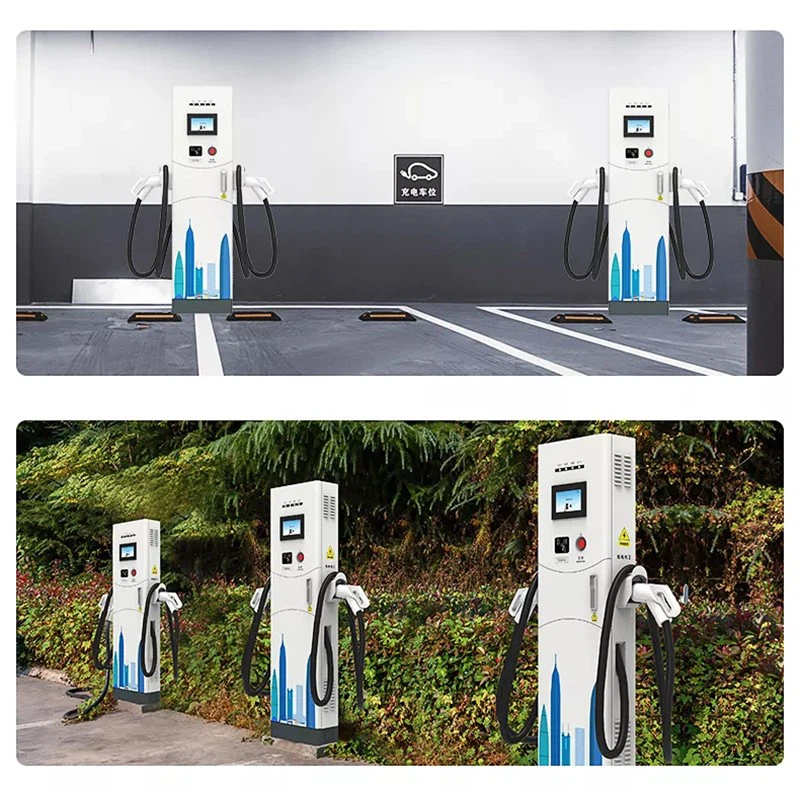
City parking lots & shopping centers Fast DC public charging piles
Highway service areas High-power DC fast charging stacks
Residential community parking Mixed AC + DC solution depending on overnight vs fast-turn
Taxi / ride-hailing hub Industrial-grade, high-cycle fast chargers
Company workplace charging Mix of AC smart chargers + selective DC fast chargers
Public charging is no longer one-size-fits-all - match equipment to flow and parking duration.

🔋 Power & Speed: The First Thing Everyone Checks
Charging speed isn't just about power; it's about delivering stable power across many vehicles daily.
Look for systems with:
Efficient, modular power units
Wide voltage adaptability
Intelligent cooling + heat management
Real-time power monitoring
A charger that starts fast but overheats mid-day is not a fast charger - it's a liability.

🛡️ Safety Is Non-Negotiable
A public charger operates unsupervised. Safety isn't a feature; it's a requirement.
The right charging pile should include:
Over-voltage / Over-current protection
Short-circuit handling
Surge & low-voltage protection
Insulation monitoring
Temperature-controlled shutdown logic
Reliability means no sparks, no shutdowns, no downtime.
🌐 Smart System = Efficient Operation
We live in a connected world. Modern charging devices must be intelligent and network-ready.
What to look for:
Remote monitoring & diagnostics
Charging status visualization
Fault alert system
Payment & user authentication (RFID/App/QR)
Load balancing for energy savings
A smart charger lowers your operational cost and keeps users happy - even before they ask for help.

🧰 Durability: Public Charging = Public Conditions
Outdoor EV chargers face:
Heat
Cold
Rain
Dust
Frequent handling
Constant use
Choose models with:
Industrial-grade housing materials
IP-rated weatherproofing
Corrosion-resistant components
Efficient active cooling
Public chargers need to perform summer to winter, day after day.
💰 Cost vs ROI: Look Beyond the Purchase Price
Many operators compare sticker prices and pick the cheapest option.
This is a mistake.
True cost = unit cost + installation + maintenance + uptime performance.
Ask yourself:
Will this charger break down frequently?
Will it support more EV models over time?
Is it scalable as demand grows?
A high-quality charger pays for itself faster.
👨🔧 Support & Warranty Matter More Than You Think
EV charging equipment is advanced power electronics. You want:
Direct manufacturer support
Fast parts replacement
Clear warranty terms
Technical guidance for installation & operation
Downtime kills revenue - choose a partner, not just a product.
✅ Final Word
Choosing public car charging piles isn't only about technology - it's about experience, reliability, and sustainability.
Invest wisely today, and you support:
EV customer convenience
Long-term infrastructure value
A greener transportation ecosystem
Public charging is becoming as essential as street lighting. Smart cities, smart businesses - they're planning for it now.