

do fast charging stations need to be grounded
Hey there, fellow EV owners, charge station operators, and anyone deep in the thick of the fast charging game. Today, I wanna tackle a question that comes up at least twice a week in our sales calls, tech support tickets, and even random garage chats: Do fast charging stations actually need to be grounded? As a supplier who's been building and deploying Fast Electric Charging Stations for the last five years, I get why this isn't just a "yes or no" thing. It's not some random safety box-check-it's tied to how EVs work, how charge stations handle power, and the people who park their cars to juice up. Let's break it down without the stuffy engineering jargon, promise.
First, let's set the scene. Fast charging stations (we're talking DC fast chargers, not the slow Level 2 ones in your garage) pump a ton of power-way more than a standard wall outlet-directly into an EV's battery pack. That's why they can get you 80% charge in 20 minutes, which is a game-changer for road trips. But all that high-voltage power? It doesn't play nice if it doesn't have a safe path to go somewhere if something goes wrong. That's where grounding comes in.
Wait, what even is grounding, exactly? For non-technical folks, it's basically a dedicated metal wire that connects the entire charging station (and the EV plugged into it) to the Earth. Think of it as a super safe escape route for electricity. If there's a glitch-like a frayed wire inside the charger that touches the metal casing, or a surge from the grid-that excess power doesn't have to wander where it shouldn't. It zips straight through the ground wire into the Earth, which is a giant, infinite power sink that never gets overloaded. No grounding? That excess power has nowhere to go, so it might try to jump through whatever's nearby-like a customer holding the charger handle. That's a huge risk.
But hold on, some people push back: "My home Dc Car Charger For Home doesn't have that fancy grounding setup, and it works fine!" Fair point. Home DC chargers are way lower power than public fast chargers-they're usually 7kW or less, while a fast charger can be 50kW, 150kW, even 350kW. Less power means smaller risks, so some home installations can get away with alternative safety measures (like GFCI breakers) instead of full grounding. But public fast charging stations? They're in high-traffic areas, often outside, near wet ground, near metal structures. Those factors crank up the risk, so grounding isn't just nice-it's required by pretty much every electrical code out there, from the National Electrical Code (NEC) in the U.S. to IEC standards globally.
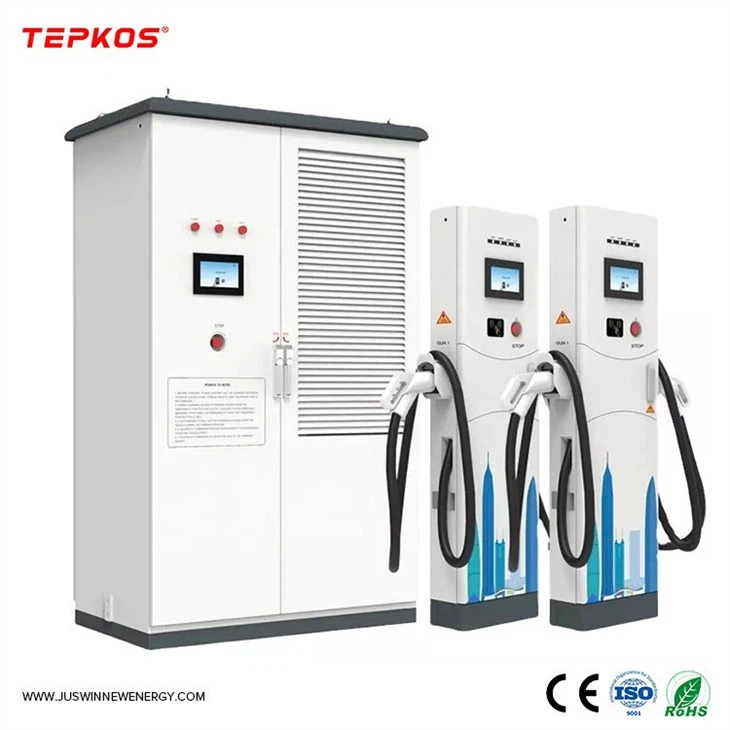

Let's talk about a real example from last year. A small grocery store near us skipped grounding for their two new fast chargers to save a few bucks on installation. A few months in, a thunderstorm blew through, and a lightning surge hit the grid. The chargers didn't have proper grounding, so that surge backed up through the cable into a customer's Tesla. The dashboard lit up like a Christmas tree, and the owner said they felt a tingle when they grabbed the charger connector. The store had to pay for the charger repairs, a full system upgrade, and a big fine from the local building department. That's the kind of mistake grounding prevents.
Now, let's get into the engineering side a little (I'll keep it light, I swear). Fast charging stations rely on a component called a EVSE-Electric Vehicle Supply Equipment. The EVSE's grounding system doesn't just connect the station to Earth; it also talks to the EV's onboard charger. The car checks the grounding signal before it lets power flow. If the signal is weak or missing, the charger won't activate at all. That's a built-in safety feature! So if a fast charger isn't grounded, it's not just a safety hazard-it might not even work correctly. I've had a few customers send us videos of chargers that won't power on, and 9 times out of 10, the issue is a loose or missing ground wire. That's why when we build our Electric Vehicle Charging Units, we include dual redundant ground wires-one for the charger casing, one for the power circuit-because cutting corners here is asking for trouble.
Wait, but is there a scenario where a fast charger doesn't need grounding? Let's be honest, not many. The only exception we've seen is temporary, mobile fast chargers used for events or construction sites. Those are mounted on trailers, and most are battery-powered instead of grid-tied, so they don't need a permanent ground connection. But once you're talking about a fixed, grid-connected fast charging station that's gonna be used day in and day out by the public? Grounding is non-negotiable. Even on remote highway stops-where you might think "what's the big deal out here"-the ground is still a valid conductor, and codes still require it.
Another angle: longevity. Fast chargers are a big investment, right? Most operators expect their stations to last 10-15 years. Poor grounding (or no grounding) leads to voltage surges that degrade internal components-like rectifiers, cables, and cooling systems. We've seen chargers with ungrounded systems that failed 3-4 years early, just because the surges wore out the electronics. Proper grounding extends the life of the charger and cuts down on maintenance costs, which means higher ROI for operators. That's a win-win for everyone.
Let's also talk about user trust. If you're pulling into a fast charger at a rest stop, you wanna feel safe-safe that the charger won't shock you, safe that your car won't get damaged. If a station doesn't look grounded, word spreads on EV forums, social media, and apps like PlugShare. Operators have told us that low-trust stations have 20-30% fewer users than nearby stations that look well-maintained and have obvious grounding components (like the copper wire running from the charger base down into the ground). So grounding isn't just a technical thing-it's a business thing.
I know what some folks are thinking: "Grounding adds time and cost to installation. Can't we skip some steps?" Yeah, but the cost of skipping it is way higher. Let's do the math: A proper grounding system for a 150kW fast charger adds about $500-$1,000 to installation costs. The average fine for non-compliance is $5,000+, plus the cost of repairs if there's an accident. Plus, lost revenue from stations being out of service. That's a no-brainer-grounding is a small upfront cost for huge peace of mind.
Now, let's tie this to what we do as a supplier. We don't just sell fast chargers-we provide Electric Car Charging Infrastructure that's built to last, with safety as the top priority. Every one of our Fast Charging For Ev Cars units comes pre-wired for proper grounding, with all the necessary components to meet local codes. We also offer installation support to make sure that ground wire is hooked up correctly, because we don't wanna see our customers run into issues. If you're a business owner, property manager, or someone looking to set up a fast charging station, we can walk you through every step-from choosing the right charger to making sure all safety standards are met.
At the end of the day, fast charging stations absolutely need to be grounded. It's not a rule we made up; it's a proven safety measure that protects users, operators, and the equipment. Without it, you're risking shocks, equipment damage, code violations, and lost business. If you're considering adding fast chargers to your property, or you have questions about grounding, charger specs, or anything else EV charging related, reach out to our team. We're here to help you make the right choice for your needs, no stuffy sales pitches, just straight answers.
References
- National Electrical Code (NEC) Article 625: Electric Vehicle Charging Systems (2023 Edition)
- International Electrotechnical Commission (IEC) 61851-1: Electric Vehicle Conductive Charging System - Part 1: General Requirements
- U.S. Department of Energy, Office of Energy Efficiency & Renewable Energy: Fast Charging Station Safety Guidelines (2022)
- Society of Automotive Engineers (SAE) J1772: Electric Vehicle Coupler and Charging System Standard