Why Does Your EV Charger Need To Speak Multiple Languages?
As electric vehicles (EVs) become increasingly mainstream, the need for standardized charging infrastructure has never been clearer. With CCS, CHAdeMO, NACS, and other protocols coexisting globally, interoperability remains a critical challenge. This article explores the technical differences between major charging standards, analyzes multi-protocol integration solutions, and highlights software optimization strategies to drive compatibility-backed by the IEA's projection that 60% of global charging stations will adopt unified protocols by 2025 .
1. Key Protocols: Technical Differences and Market Dynamics
CCS (Combined Charging System):
Design: Combines AC and DC charging in a single connector, with support for up to 350 kW (SAE J1772 for North America, Type 2 for Europe) .
Compatibility: Used by 95% of non-Tesla EVs globally, including brands like BMW, Nissan, and Porsche.
Advantages: Backward-compatible with older AC chargers, making it ideal for retrofitting existing infrastructure.
NACS (North American Charging Standard):
Design: Tesla's proprietary connector, optimized for compactness and liquid-cooled cables, delivering up to 250 kW .
Market Reach: Dominates North America but is expanding globally as automakers like Ford and GM adopt it.
Limitations: Requires adapters for non-Tesla vehicles, though Tesla's open-source initiative aims to address this.
CHAdeMO:
Design: Developed by Japanese automakers, supporting up to 200 kW with a distinct "gun-style" connector.
Market Presence: Still prevalent in Japan and parts of Asia, but declining as CCS gains traction.
Evolution: CHAdeMO 3.0 (ChaoJi) introduces 500+ kW charging with liquid-cooled cables, harmonized with China's GB/T standard .
GB/T (China):
Design: China's national standard, supporting up to 600 A and 1.5 MW in its latest iteration .
Market Influence: Critical for EV adoption in China, the world's largest EV market.
2. Multi-Protocol Integration: Hardware Solutions
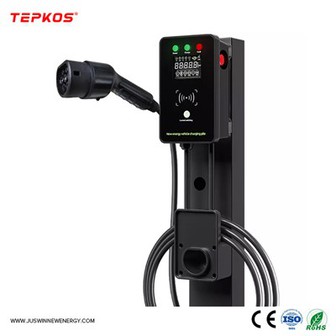
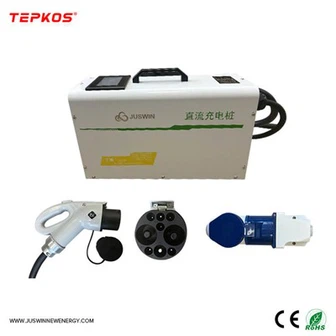
To address fragmentation, manufacturers are developing universal chargers capable of supporting multiple protocols. For example:
Hybrid Chargers: Units like the ABB Terra HP integrate CCS, CHAdeMO, and NACS in a single unit, eliminating the need for adapters .
Modular Design: Companies like EVBox offer swappable connector modules, allowing operators to update protocols as standards evolve.
Liquid-Cooled Cables: Essential for high-power charging (e.g., CHAdeMO 3.0), these cables reduce energy loss and enable faster charging.

3. Software Optimization: Dynamic Protocol Switching
Intelligent Charging Management:
OCPP (Open Charge Point Protocol): Enables real-time communication between chargers and central systems, allowing dynamic adjustment of voltage, current, and protocol selection .
AI-Driven Algorithms: Machine learning models analyze user behavior and grid conditions to prioritize compatible protocols, minimizing downtime .
Plug-and-Charge (ISO 15118): Automates authentication and payment via secure vehicle-to-grid (V2G) communication, reducing user interaction .
Security and Compliance:
Multi-Layer Authentication: Encryption and digital certificates ensure secure protocol switching, preventing unauthorized access.
Global Certifications: Chargers must comply with standards like UL, CE, and ISO 15118 to ensure interoperability and safety.
4. Industry Trends and the Path to Standardization
The IEA predicts 60% of global charging stations will adopt unified protocols by 2025 , driven by:
Policy Mandates: The EU's Alternative Fuels Infrastructure Regulation (AFIR) requires CCS-compatible fast chargers every 60 km on major highways .
Collaborative Initiatives: Organizations like the CharIN alliance promote CCS adoption, while Tesla's NACS open-source push aims to standardize its connector.
Consumer Demand: EV owners increasingly expect seamless charging across networks, pushing operators to adopt multi-protocol solutions.

5. Our Role: Advancing Compatibility
As a leading EV charging solutions provider, we prioritize open standards and future-proof design:
Multi-Protocol Chargers: Our units support CCS, CHAdeMO, NACS, and GB/T, ensuring compatibility with 99% of global EVs.
Software Innovation: Our cloud-based platform uses OCPP and AI to optimize protocol selection and load balancing, enhancing user experience.
Compliance Leadership: Our products meet UL, CE standards, ensuring reliability and interoperability.
Contact us to explore our solutions. Together, we're powering the future of sustainable mobility.
#EVCharging #ProtocolCompatibility #CCS #CHAdeMO #NACS