

Can I charge my EV faster with a higher amp Type 2 Wallbox?
If you’ve ever stood around an EV charger waiting for your ride to top up, you’ve probably wondered: can I make this go faster? I get it—time’s precious, and sitting around with a coffee while your car charges isn’t exactly how most of us want to spend our days. As a Type 2 Wallbox supplier, I field this question all the time: “Will a higher amp wallbox charge my EV quicker?” The short answer is… it depends, but it’s not as simple as “more amps = faster charge” for every scenario. Let’s break this down like we’re chatting over a quick (non-charging) coffee, no jargon overload.
First, let’s recap the basics for anyone who’s still wrapping their head around EV charging. Type 2 is the standard connector for most EVs in Europe, the UK, and a growing number of other regions—it’s that compact, symmetrical plug that works for both home and public charging. Wallboxes, or home chargers, are way better than plugging into a regular wall outlet (which is usually around 10-15 amps, super slow) because they’re designed to deliver consistent, higher power without tripping your circuit.
Amps (amperage) are part of the power equation for AC charging—power = volts x amps, right? For home and most wallbox setups, we’re working with 230 volts (standard for residential in those regions), so higher amps mean higher AC power. On paper, a 16-amp wallbox puts out ~3.7 kW, a 32-amp puts out ~7.4 kW, a 48-amp puts out ~11 kW, and even higher amps like 80 amps get up to ~22 kW. So logically, higher amps should mean faster charging, right? But here’s the catch: your EV’s onboard charger (OBC) has a max limit for how much AC power it can take. That’s the key number most people miss.
Let’s use an example. If your EV has an OBC that maxes out at 7.4 kW (that’s common for many smaller to midsize cars, like the Nissan Leaf, Renault Zoe, or even some entry-level Teslas), then a 16-amp (~3.7 kW) wallbox will be slower than a 32-amp (~7.4 kW) one. But if you plug that same car into a 48-amp (~11 kW) wallbox, nothing happens—your car will only pull 7.4 kW, because its OBC can’t handle more. That extra ampacity is just wasted, basically. I’ve had customers get this wrong before: they bought a fancy higher-amp wallbox thinking it’d cut their charge time in half, only to find their car capped the speed. So first step: check your EV’s max AC onboard charger rating. You’ll find this in your owner’s manual, or a quick Google search with your car model + “max AC charge rate” will pull it up.
Now, what if your EV has a higher OBC, say 11 kW or 22 kW? Then a higher amp wallbox will actually speed things up. For example, a Volkswagen ID.4 with an 11 kW OBC will charge much faster on a 48-amp (~11 kW) wallbox than a 16-amp one. A Tesla Model 3 with a 11.5 kW OBC will hit that max on a 32-amp (~7.4 kW) or 48-amp (~11 kW) unit, so moving beyond that won’t help—wait, no, actually, a 80-amp wallbox is ~22 kW, but most residential circuits can’t handle that (you’d need a 100-amp subpanel), so for home use, 7.4 kW or 11 kW is usually the sweet spot, and that’s where a higher amp wallbox shines if your car can take it.
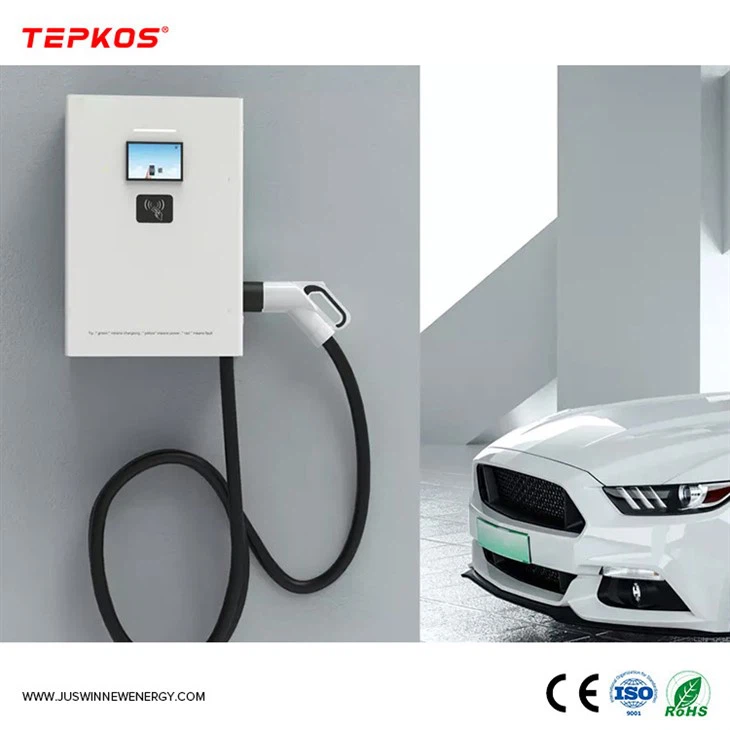

Wait, but let’s not forget DC fast chargers, because that’s where a lot of the confusion mixes in. DC chargers skip the onboard charger, sending power straight to the battery, so their max charge rate is determined by the car’s battery management system (BMS), not the OBC. If you’re asking about home charging though, you’re almost always dealing with AC wallboxes—though we do offer DC wallboxes too, like our DC Wallbox EV Charger if you’re looking for faster home charging for larger batteries or long trips. That said, even DC chargers have limits: a car with a max DC charge rate of 50 kW won’t go faster on a 100 kW DC charger, same logic as AC.
Another thing to consider: charging speed slows down as your battery fills up. That’s not about the wallbox’s amps—that’s about protecting the battery. Lithium-ion batteries hate being charged super fast when they’re 80% full or more; it generates too much heat, so the BMS drops the charge rate to avoid damage. So even if you have a 22 kW wallbox, once your battery hits 80%, you might only be charging at 10 kW or less, no matter how high the amps. That’s a normal part of EV life, not a wallbox flaw.
Now, let’s talk about practical home use, because that’s what most of my customers care about. If you’re driving a compact EV with a 3.7 kW OBC, a basic 16-amp Wallbox Charge is totally fine—you’ll get a full charge in around 8 hours overnight, which is perfect for most people’s daily commute. If you have a midsize or large EV, or you want to be able to top up faster for longer drives, a 32-amp or 48-amp wallbox makes sense. For example, a 32-amp unit will cut charge time in half for a car that can take 7.4 kW, so instead of 8 hours, it’s 4 hours. That’s a game-changer if you ever need to charge up during the day, not just overnight.
Wait, what if you have a small solar setup at home? If you’re charging with solar power, a higher amp wallbox is better because you can pull more power from your panels if they’re producing enough, instead of limiting yourself to 3.7 kW. That’s a big one for EV owners who want to maximize their self-consumption and reduce grid reliance. We’ve had customers pair our wallboxes with residential solar and see huge savings on their energy bills, because they can charge their car during the day when the sun is shining, no need to wait for slower, lower-amp chargers.
But here’s a common myth I want to bust: higher amps don’t always mean more energy usage. The total energy your battery gets is the same, regardless of the wallbox’s amperage, as long as it’s within your car’s OBC limit. A 32-amp wallbox will send the same total kWh to your battery as a 16-amp one, it’ll just do it faster. So if you’re on a time crunch, higher amps help, but if you’re okay with overnight charging, a lower amp unit works fine and is cheaper upfront. Speaking of cost, that’s a big factor for most people: higher amp wallboxes are more expensive, so you have to weigh whether the faster charge is worth the extra cash. If you only drive 20-30 miles a day and charge once a week, a 16-amp unit is totally sufficient and saves you money. If you drive 100+ miles a day or take frequent road trips, the extra cost of a higher amp wallbox pays off in saved time.
Wait, let’s circle back to DC chargers, because I know some people confuse home AC wallboxes with public DC fast chargers. Public DC chargers can be up to 350 kW, which is crazy fast, but again, your car has a max DC limit. If you’re using a public charger, higher amps (which translate to higher kW for DC) will only help if your car can take that power. Our Wallbox Dc Electric Car Charger line is designed for both home and small business use, with options that fit different DC charge rates, so you can pick one that matches your car’s capability. For example, if you have an EV that can take 50 kW DC, a 50 kW DC wallbox is perfect, and you won’t waste money on a 100 kW unit you can’t use.
Another point: circuit capacity in your home. You can’t just plug a 48-amp wallbox into a regular 100-amp home panel—you need to have the electrical infrastructure to support it. Most older homes are only set up for 100-amp service, which might handle a 32-amp wallbox, but not a higher one. That’s why it’s always a good idea to get an electrician to do a pre-install check before buying a higher amp wallbox. We recommend that to all our customers, actually—we don’t want them to buy a charger that won’t work with their home’s setup, no matter how high the amps are. For example, our 3.5 Kw Ac Fast Charging Wallbox is perfect for older homes with lower circuit capacity, if you can’t upgrade your panel right now. That’s a great option for anyone renting, or who doesn’t want to spend money on electrical upgrades.
Let’s also address a scenario I get all the time: “I have an older EV with a low OBC, can I use a higher amp wallbox anyway?” The answer is yes, but it won’t charge faster. The car will only pull as much power as its OBC allows, so you’ll be paying for a higher amp unit that you’re not using to its full potential. Unless you plan to upgrade your EV in the next few years, a lower amp wallbox is a smarter investment. It’s like buying a sports car engine for a scooter—cool, but not necessary, and you won’t get the performance you’re paying for.
Wait, but what about level 1 vs level 2 charging? Level 1 is the 120-volt outlet you might use in a pinch, which is around 1.4 kW (6 amps), super slow. Level 2 is the 230-volt wallboxes we’re talking about, which start at 16 amps (3.7 kW) and go up. So any Level 2 wallbox is way faster than Level 1, but within Level 2, higher amps = faster charge, only if your car can keep up. That’s the simplest way to put it, no fancy math needed.
Let me give a real-life example from a customer I worked with last year. She had a 2021 Kia Niro EV with a 7.2 kW OBC. Initially, she bought a 16-amp wallbox because it was cheaper, but she complained that it took 10 hours to charge from 20% to 80%. She upgraded to a 32-amp wallbox, and that charge time dropped to 5 hours—half the time, same total range added, because her car could actually pull the full 7.2 kW. That’s exactly the scenario where higher amps make a huge difference. Another customer had a 2016 Nissan Leaf with a 3.6 kW OBC; he bought a 48-amp wallbox thinking he’d cut his charge time, and he ended up returning it because it was the same speed as his old 16-amp unit. That’s the kind of experience we want to help people avoid, so we always ask for their car model and max charge rate before recommending a wallbox.
Now, if you’re in the market for a wallbox, what should you look for beyond just amps? We’ve built our entire wallbox line to be smart, easy to install, and compatible with all Type 2 EVs, no matter their max charge rate. Our Wallbox Charge line has options from 16-amp to 48-amp, so you can pick the one that fits your car and home. We also offer AC Fast Charging Wallbox units for mid-range power, and for anyone looking for home DC charging, our DC Wallbox EV Charger and Wallbox Dc Electric Car Charger options let you get fast DC charging without needing to go to public stations.
Wait, one more common question: do higher amp wallboxes damage my EV? No, not at all. Wallboxes are smart enough to communicate with your car’s OBC and only send as much power as the car can handle. They won’t push extra amps that would overheat or damage your battery. That’s why we build our wallboxes with built-in safety features—overcurrent protection, temperature monitoring, and communication protocols that match all modern EVs. So you don’t have to worry about plugging a higher amp unit into a car that can’t take it; it just won’t charge faster, that’s all.
Let’s wrap this up so it’s clear. The answer to “Can I charge my EV faster with a higher amp Type 2 Wallbox?” is: yes, but only if your EV’s onboard charger can handle that higher power. If your car’s max AC charge rate matches or is lower than the wallbox’s output, higher amps will speed up charging. If your car’s OBC is capped lower, higher amps won’t help, and you’ll just waste money on a unit you can’t use to its full potential.
For most home users, a 32-amp wallbox is the sweet spot—it balances speed, cost, and compatibility with most modern EVs (many of which have 7.4 kW OBCs). If you have an older EV or limited home circuit capacity, our 3.5 Kw Ac Fast Charging Wallbox or lower-amp Wallbox Charge units work perfectly and are more affordable. If you want even faster charging for large batteries or road trips, our DC Wallbox EV Charger line gives you home DC charging that beats most Level 2 speeds, no public station needed.
At the end of the day, the best wallbox for you is the one that matches your car’s capabilities, your home’s electrical setup, and your daily driving needs. If you’re not sure which one is right, feel free to reach out to our team for personalized recommendations—we’ve helped hundreds of customers pick the right wallbox, and we’re here to make sure you don’t waste money on a charger that won’t work for you.
References:
- International Energy Agency. (2023). Global EV Outlook 2023. IEA Publications.
- SAE International. (2022). SAE J1772: Electric Vehicle Conductive Charge Coupler. SAE Standards.
- Department of Energy. (2024). Electric Vehicle Charging Basics. Alternative Fuels Data Center.
- Lithium-ion Battery Association. (2023). Best Practices for EV Battery Charging and Maintenance. LIBA Guidelines.