Home EV Charger Compatibility Explained: Standards, Interfaces, And Power Limits
Comprehensive Analysis of Compatibility for Home EV Chargers
1. National Standard Compatibility: Basic Adaptation Under Unified Norms
EV charging facilities are developed under national standards, which define unified requirements for interface design, charging protocols, and communication methods. The regulation Limited Values and Energy Efficiency Grades for Energy Efficiency of Electric Vehicle Power Supply Equipment (GB 46519-2025), implemented in 2025, further strengthens compatibility requirements.
This regulation clearly states that EV chargers must support communication protocol docking with vehicles from multiple brands. It also specifies that charging equipment manufactured after November 2026 may only be released to the market after passing mandatory energy efficiency certification.
At present, mainstream public chargers-such as those operated by State Grid and TELD-have largely achieved full compliance with national standards. These chargers are compatible with major EV brands including Tesla, BYD, and AITO, allowing users to change vehicles without needing to replace charging equipment.
2. Differences in Vehicle Interface Adaptation: Dual Constraints of Physical Interfaces and Protocols
Although national standards provide a unified framework, practical differences still exist among various EV brands and models. These differences mainly arise from two dimensions:
Interface standards:
Tesla commonly adopts the Type 2 interface, while most domestic brands such as BYD use the C60 interface. In such cases, physical connection requires the use of an adapter or a conversion cable.
Charging protocols:
Tesla relies on proprietary charging protocols (such as NACS), whereas BYD follows the GB/T standard. When protocols are mismatched, charging efficiency may decrease significantly. For example, when non-Tesla vehicles use Tesla Superchargers, charging power may be reduced by 30%–50%.
Home charger compatibility:
Tesla's third-generation home charger can support other brands through charging permission control settings, but performance optimization is mainly designed for Tesla vehicles. BYD home chargers, by contrast, are compatible with most domestic models due to full compliance with national standards, but they do not support Tesla's ultra-fast charging modes.
3. Voltage and Power Limiting Factors: Constraints in Home Charging Scenarios
Home EV charging is highly dependent on local power supply conditions, which directly affect compatibility and performance.
Household circuit capacity:
Standard household sockets rated at 16A typically support only around 3kW of power, which is insufficient for fast charging. Achieving charging power above 7kW requires a dedicated charger and circuit upgrade.
Vehicle voltage compatibility:
The charger's voltage range must match the vehicle's battery platform, such as 400V or 800V systems. If the voltage range does not align, charging may fail to start or operate at very low efficiency.
Impact of updated national standards:
The 2025 regulation requires chargers to support dynamic power adjustment. Some advanced home EV chargers already offer automatic power matching based on vehicle voltage and grid conditions, while older equipment may require retrofitting or replacement to remain compliant.
Product Recommendation: JUSWIN Home EV Charger as a Compatible Solution
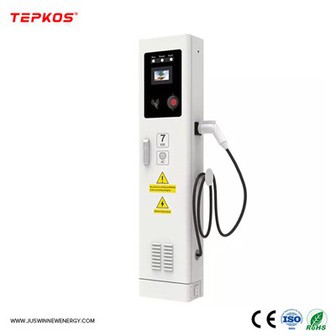
To address the compatibility challenges outlined above, JUSWIN home EV charger is designed to meet national standards while adapting to diverse residential charging scenarios.

Comprehensive national standard compliance:
Fully compliant with GB 46519-2025 and GB/T standards, JUSWIN home EV charger has passed energy efficiency certification and supports communication protocols used by mainstream brands such as Tesla, BYD, and AITO. Vehicle replacement does not require charger replacement.
Power Option:
Customized with 220V single-phase or 380V three-phase household circuits, JUSWIN home EV charger supports optional power levels from 7kW to 22kW. It matches vehicle voltage platforms (400V or 800V) with household load conditions to ensure stable charging without circuit tripping.
Reliable safety protection:
The system integrates overcurrent, overvoltage, short-circuit, and temperature protection, and features an IP54 protection rating, making it suitable for both indoor and outdoor residential installation.
Whether you drive a domestic EV such as BYD or an imported model like Tesla, JUSWIN home EV charger offers a one-stop compatibility solution. Designed in line with current regulations while allowing room for future upgrades, it provides a practical and forward-looking option for home EV charging.
For detailed specifications or customization requirements, feel free to contact our team.