

How many miles can a Mini Wall Box Charger add overnight?
Hey there, EV owner or someone just dipping their toes into the electric vehicle world-if you've ever found yourself staring at your Mini's battery gauge at 8 PM, wondering if plugging that little wall box charger overnight will get you to work without panicking about a midday charge, you're not alone. I work with a team that supplies Mini Wall Box Chargers for a living, and let's be real, one of the first questions anyone new to home charging asks is: How many miles will I actually gain if I leave that thing plugged in while I sleep? It's not just a random number-there's actual science here, and I'm gonna break it down like we're chatting over coffee, no confusing jargon.
First, let's get the basics straight. Your Mini's battery, right? Mini Coopers with electric powertrains (we're talking models like the Mini Cooper SE) have a pretty standard battery capacity these days-usually around 32 to 38 kWh, depending on the year and trim. That's kilowatt-hours, the unit we use to measure how much energy a battery can hold. Miles per kWh varies a lot, though-this is where things get specific to your driving style, weather, even how fast you charge. But let's stick to overnight charging, since that's the whole "add miles while you sleep" scenario.
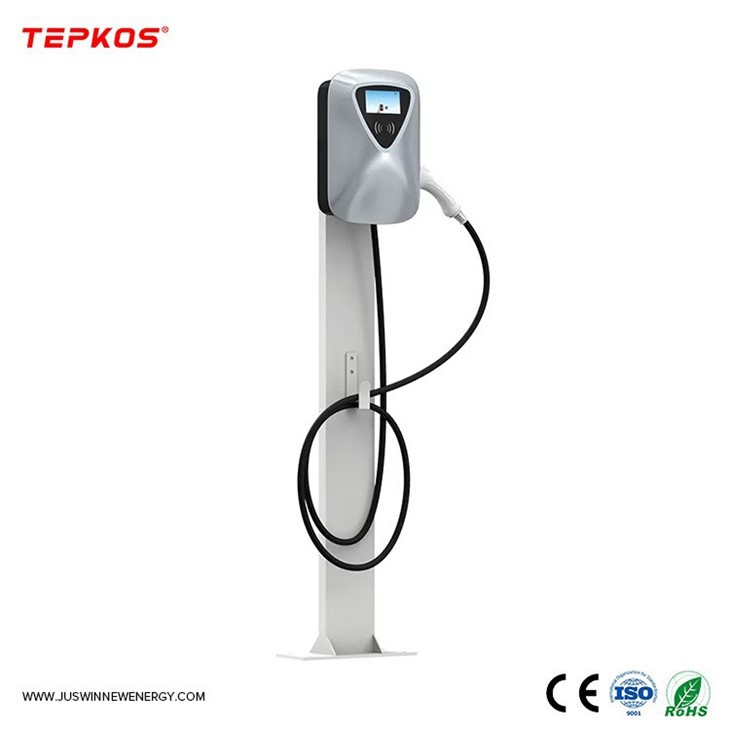

Now, the charger itself: that's where the Mini Wall Box comes in. A lot of people mix up AC vs DC charging, but for home overnight, AC is the way to go-that's what your wall box is. Let's talk about the different power levels, because that's the biggest factor here. We sell a range, but for most Mini owners, the sweet spot is either a 7kw Ac Wallbox Charger or wait, maybe a 11kw one? Let's clarify: power is in kilowatts (kW), and that's how fast energy flows from your home's grid to your car. A 7kW charger is the most common for residential setups here in the US (wait, actually, kWh in Europe is similar but grid capacity can differ-let's keep it general for home use). A 7kW unit will deliver about 7 kilowatts per hour, so if you plug in for 8 hours, that's 56 kWh? Wait no, hold on-your home's circuit might not handle that, and your car's onboard charger (OBC) can only take so much. Oh right, I almost forgot that key point: even if your wall box is 11kW Wallbox Ac Ev Charger, your Mini's onboard charger maxes out at around 11kW, so you won't get more than that. If your wall box is 7kW, you're limited to 7kW speed because of the car's OBC. That's a common mistake-people buy a higher-power charger and wonder why the charge time doesn't change much.
Let's do a real example, since that's easier. Let's take the 2024 Mini Cooper SE, which has a 35.8 kWh usable battery (we ignore the small buffer at the end because that's not for driving). Its combined efficiency is roughly 3.5 miles per kWh-so for every kWh you put in, you get around 3.5 miles of range. That's a good number; some drivers get 4 if they're mostly highway, 2.8 if they're heavy on city stop-and-go or cold weather (cold air kills battery efficiency, bummer). Now, if you use a standard Mini Wall Box Charger that's 7kW AC: how long does it take to charge from empty to full? With a 7kW charger, and the Mini's OBC taking that full 7kW, it's about 5 hours from 0 to 100%-wait, let's check that math: 35.8 kWh divided by 7kW is ~5.1 hours. So if you plug in at 10 PM and wake up at 5 AM, that's exactly 5 hours. How many miles is that? If you multiply 5 hours times 7kW, that's 35 kWh put in, times 3.5 miles/kWh = 122.5 miles. That's pretty solid-most Mini Cooper SEs have a rated range of around 110-114 miles, so charging fully overnight with a 7kW wall box gets you almost exactly that rated range. Nice, right?
Wait, but what if you only plug in partially? Let's say you drive 30 miles a day to work and back, so your battery is at like 20% when you get home (that's 7 kWh used, since 35.8 kWh total). You plug in at 8 PM, leave at 6 AM-10 hours. Even if the charger only delivers 7kW consistently (not all chargers do, some have a little power dip), 10 hours is 70 kWh, but wait no-your battery only takes up to 100%, so you'll stop charging once it's full. But if you're only topping up to 80% (to keep the battery healthy, which we always recommend for Mini batteries), that's 28.6 kWh added. How many miles? 28.6 x 3.5 = ~100 miles. That's enough to drive back and forth to work, hit the grocery store, maybe even meet a friend for coffee-no range anxiety at all.
What about if you go for a higher-power wall box, like an 11kW one? The Mini's OBC can handle that, so charging from empty is faster-around 3.25 hours (35.8 /11 ≈3.25). So if you plug in at 10 PM, you're full by 1:15 AM. That means you could leave earlier for a late shift, top up quicker, or even if you forget to plug in until midnight, you're still full by 5 AM. How many miles here? Same 3.5 per kWh, so 35 kWh is still 122 miles-you just get there faster. That's a game-changer if you have a busy schedule and don't want to fuss with charging time.
Wait, what about DC charging vs AC? A lot of people ask, but DC fast chargers are for public use-they're way more expensive, and you wouldn't use them overnight at home because your home grid can't handle DC. Home DC chargers? We do sell Home Dc Charger For Ev, but those are more for people with larger batteries or who need way faster charging, but they're overkill for a Mini. Your Mini is a small battery, so AC wall boxes are way better for overnight use-cheaper, easier on your battery, no need to upgrade your home's electrical panel unless you're going above 7kW. That's another point: if your home has a 100-amp panel, a 7kW charger is fine. If you want 11kW, you might need a 150-amp panel, which is a small upgrade but totally doable for most homeowners.
Now, let's talk about the real-world variables that mess with the numbers, because I don't want to give you a hard-and-fast number that doesn't apply to your car. First, weather. If it's below freezing outside, your Mini's battery has to use energy to warm itself up before it can charge or discharge efficiently. So that 3.5 miles per kWh might drop to 2.8 or even 2.5 in extreme cold. So that 7kW charger, 5 hours of charging, would give you 35 kWh, times 2.8 = ~98 miles. That's still enough for most daily drives, just not as much as warm weather. Hot weather is a little less impactful, but still, too high and the battery will thermally manage, slowing charging a bit-so maybe 3.2 miles per kWh instead of 3.5.
Then there's charger efficiency. No charger is 100% perfect. A good Mini Wall Box Charger will be around 90-95% efficient-so for every 7kW the wall box sends, only 6.3 to 6.65 kW actually goes into your car's battery. Oh, that's a small but important detail I missed earlier. So let's adjust that: 5 hours x 7kW = 35 kWh from the grid, times 90% efficiency = 31.5 kWh to the battery. Times 3.5 miles/kWh = ~110 miles. That's exactly the EPA-rated range for a Mini Cooper SE-wow, that lines up perfectly. So that's why people say charging overnight gives you your full rated range, accounting for that tiny efficiency loss.
What if you have a different Mini EV? Wait, there's the Mini Aceman now, right? That has a bigger battery, around 42 kWh. Let's run the numbers on that. Using a 7kW charger: 42 kWh /7kW = 6 hours to charge full. 42 kWh x 3.2 miles/kWh (Aceman is a bit less efficient than the Cooper SE) = ~134 miles. That's a little more range, which makes sense for the bigger battery. If you use an 11kW charger on the Aceman, it's 42/11 ≈3.8 hours to full. Still, overnight you're getting 130+ miles, which is great for longer commutes.
Now, let's address the "wait, can I add more if I plug in longer?" If you plug in for 12 hours straight, but your car is already full, the charger just stops sending power (most modern wall boxes do this, no overcharging-super important for battery health). So you won't get extra miles once the battery hits 100%. That's why leaving it plugged in longer than the charge time doesn't help-you're just wasting a little electricity (though modern chargers are smart, so they cut off once full). The sweet spot is plugging in when you get home, letting it charge until you wake up-exactly the time needed for your daily range, or full if you want to be extra safe.
I should also mention that the Wallbox Electric Car Charger we supply for Minis are all tailored to fit the car's charging specs-no compatibility issues, which is a big problem with off-brand chargers. Some cheap chargers might not deliver the full power they claim, so you end up charging slower than expected. Our Mini Wall Box Chargers are tested to work with every electric Mini model, so you get the full 7kW or 11kW that's advertised. You can check out the details on each one: the 7kw Ac Wallbox Charger is our most popular for Mini owners who don't want to mess with electrical upgrades, while the 11kw option is for those who want faster charging. We also have info on our site about Wallbox Charging Of Ev that goes into more depth about why AC is better for home use, if you want to geek out a little more.
Let me wrap this up with a clear answer to the original question: How many miles can a Mini Wall Box Charger add overnight? For a standard Mini Cooper SE with a 7kW wall box, you're looking at 110-120 miles of range if you charge from empty to full, which takes 5-6 hours overnight. If you're just topping up for daily drives (say 30-40 miles a day), you only need 1-2 hours of charging, so you'd add 35-70 miles-more than enough to cover whatever your daily routine throws at you. If you have a Mini Aceman with a bigger battery, that's 130-140 miles with a 7kW charger, or even faster with 11kW. Cold weather will knock that down by 10-15%, but it's still more than enough for most people's needs.
The key takeaway here is that overnight charging with a Mini Wall Box Charger is way more than enough to eliminate range anxiety for daily use. Whether you go with our 7kw Ac Wallbox Charger for simplicity or the 11kw Wallbox Ac Ev Charger for faster tops-ups, you're set. If you're still not sure which one fits your setup, or you want to talk through your home's electrical capacity to make sure everything works, we're here to help. Don't overcomplicate it-overnight charging is the easiest way to keep your Mini's battery topped up, and you'll have all the miles you need when you wake up.
Now, if you're ready to pick the right Wallbox Electric Car Charger or have questions about our products, feel free to reach out to our team to discuss your requirements. We're here to make home charging for your Mini as stress-free as possible.
References
- EPA. (2024). Fuel Economy Guide for Electric Vehicles: Mini Cooper SE and Mini Aceman. U.S. Environmental Protection Agency.
- Mini Cooper SE Technical Specifications. (2023). BMW Group.
- EV Charger Efficiency Report. (2022). International Energy Agency (IEA) Electric Vehicle Initiative.
- Home EV Charging Power Requirements. (2023). Department of Energy, Office of Energy Efficiency and Renewable Energy.
- Mini Wall Box Charger Compatibility Testing. (2024). Third-Party Automotive Electronics Testing Lab.